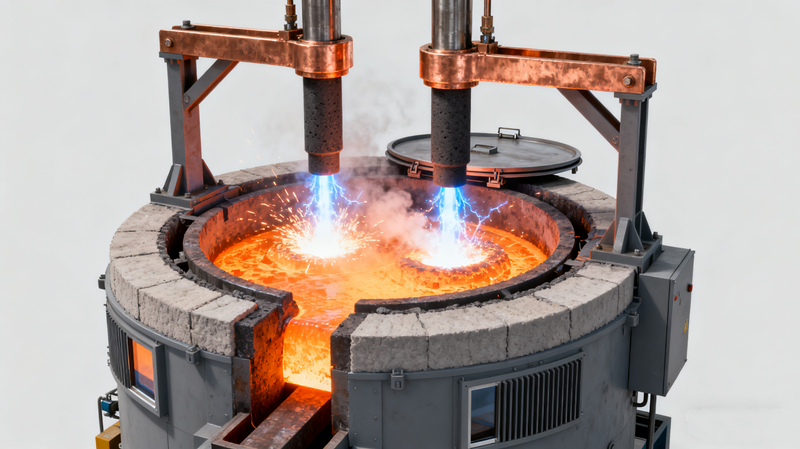
Amid the global supply chain restructuring and the tide of carbon neutrality, the United States is accelerating strategies for critical material localization, advanced manufacturing autonomy, and hazardous waste disposal compliance, guided by the CHIPS and Science Act and the Defense Production Act. The YND DC Plasma Furnace is not merely an industrial smelting device, but astrategic equipment solution provider deeply integrated into U.S. national strategic layout, focusing on three core dimensions: capturing policy dividends, enhancing supply chain resilience, and upgrading high-end production capacity. Backed by 20 years of technical expertise and 37 core patents, YND addresses key pain points in the U.S. industry with precise positioning, becoming a core partner for enterprises to seize policy opportunities and build competitive barriers.
Position 1: Policy Dividend Capture — Aligning with Federal Funding and Tax Incentives to Unlock Compliance Benefits
The YND DC Plasma Furnace takes policy alignment as a core driver, accurately connecting with U.S. federal and state-level incentives to help enterprises gain substantial benefits through compliant operations. Fully compliant with the 45X Advanced Manufacturing Production Tax Credit under the Inflation Reduction Act, the product qualifies as “critical mineral processing and clean energy equipment,” enabling enterprises to claim a production tax credit of up to 25%. It also adapts to the details of the H.R. 5441 Act, effective in 2025, which includes fusion energy material processing in the credit scope, further expanding policy coverage scenarios.
Meanwhile, the product is fully compatible with the application requirements for the U.S. Department of Energy (DOE)’s $134 million rare earth supply chain support fund. It can efficiently process unconventional materials such as mine tailings and electronic waste to extract rare earths, assisting enterprises in bidding for federal funding projects. At the state level, YND offers customized solutions for California’s AB32 Carbon Neutrality Act and Texas ERCOT power grid subsidies, allowing enterprises to benefit from both carbon credit trading and local energy-saving rebates. Additionally, we provide end-to-end compliance consulting, assisting with EPA permit applications and 45X tax credit form filing, fully connecting the implementation chain of “policy-equipment-benefits.”
Position 2: Critical Material Supply Chain Guardian — Breaking Import Dependence and Building a Local Circular Ecosystem
Against the backdrop of intensifying global supply chain competition and the U.S. Defense Production Act’s emphasis on critical mineral autonomy, the United States relies on imports for nearly 80% of its rare earth elements and over 60% of its refractory metals. This creates a “chokepoint” risk for advanced manufacturing and national defense equipment supply chains, which has become a core bottleneck restricting the development of the U.S. new energy, aerospace, and defense industries. The YND DC Plasma Furnace precisely targets this strategic pain point, with “local resource cycle reconstruction + high-end material independent mass production” as its core value, serving as a strategic equipment for the U.S. to strengthen critical material supply chain security. It is deeply aligned with the dual strategic orientations of the U.S. Department of the Interior’s “domestic critical mineral supply chain development” and the Department of Defense’s “national defense industry material autonomy.” Leveraging its core 20,000℃ ultra-high temperature plasma technology, the product can efficiently process various unconventional materials such as electronic waste, mine tailings, and industrial sludge, achieving a recovery rate of over 98% for strategic rare earth elements (neodymium, praseodymium, dysprosium) and precious metals (gold, palladium) — far exceeding the industry’s 90% economic recovery threshold. It also shortens the recovery cycle by 40%, helping the U.S. quickly build a local closed-loop supply chain of “waste resources – critical materials – end products” and break long-term dependence on imported raw materials.
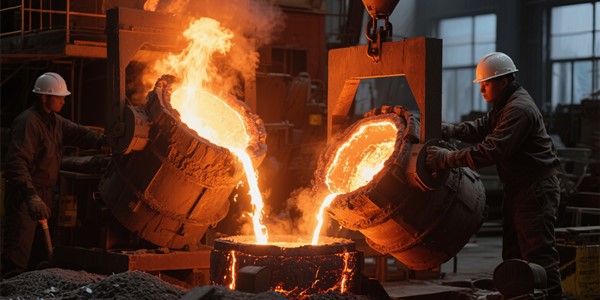
In the field of independent high-end material production, the YND DC Plasma Furnace further breaks foreign technological monopolies on high-performance special alloys. It can accurately smelt refractory metals such as tungsten, molybdenum, and niobium, and customize the production of core materials including nickel-based single-crystal superalloys, nuclear energy corrosion-resistant alloys, and aerospace engine-specific alloys. These materials directly meet the manufacturing needs of U.S. strategic equipment such as the F-35 fighter jet, next-generation nuclear reactors, and large-scale wind power equipment, fully complying with the Defense Production Act’s mandatory requirements for localized mass production of high-end materials. By providing U.S. enterprises with integrated “recovery + production” critical material solutions, YND not only ensures stable raw material supply for enterprises but also provides independent and controllable material support for the U.S. new energy vehicle, energy storage, and national defense equipment industries, strengthening national supply chain resilience from the source and helping the U.S. seize a dominant position in global high-end material competition. Currently, several U.S. mineral recycling enterprises have successfully entered the DOE’s rare earth supply chain support fund project with this equipment, achieving dual benefits of policy dividends and supply chain security.
Position 3: Advanced Manufacturing Technology Enabler — Breaking Technical Bottlenecks and Seizing High-Value Frontiers
In response to the trend of U.S. advanced manufacturing upgrading toward digitalization, customization, and high-temperature resistance, the YND DC Plasma Furnace empowers industrial upgrading through technical barriers, focusing on high-value-added segments to build differentiated advantages. Unlike competitors such as TRUMPF and Libra-tech that focus on general-purpose fields, YND specializes in high-end scenarios including aerospace, fusion energy, and additive manufacturing. With ±5℃ precise temperature control and inert atmosphere customization capabilities, it can produce high-performance alloy powders for additive manufacturing, meeting 55% of the demand for high-performance alloys in the U.S. aerospace sector.
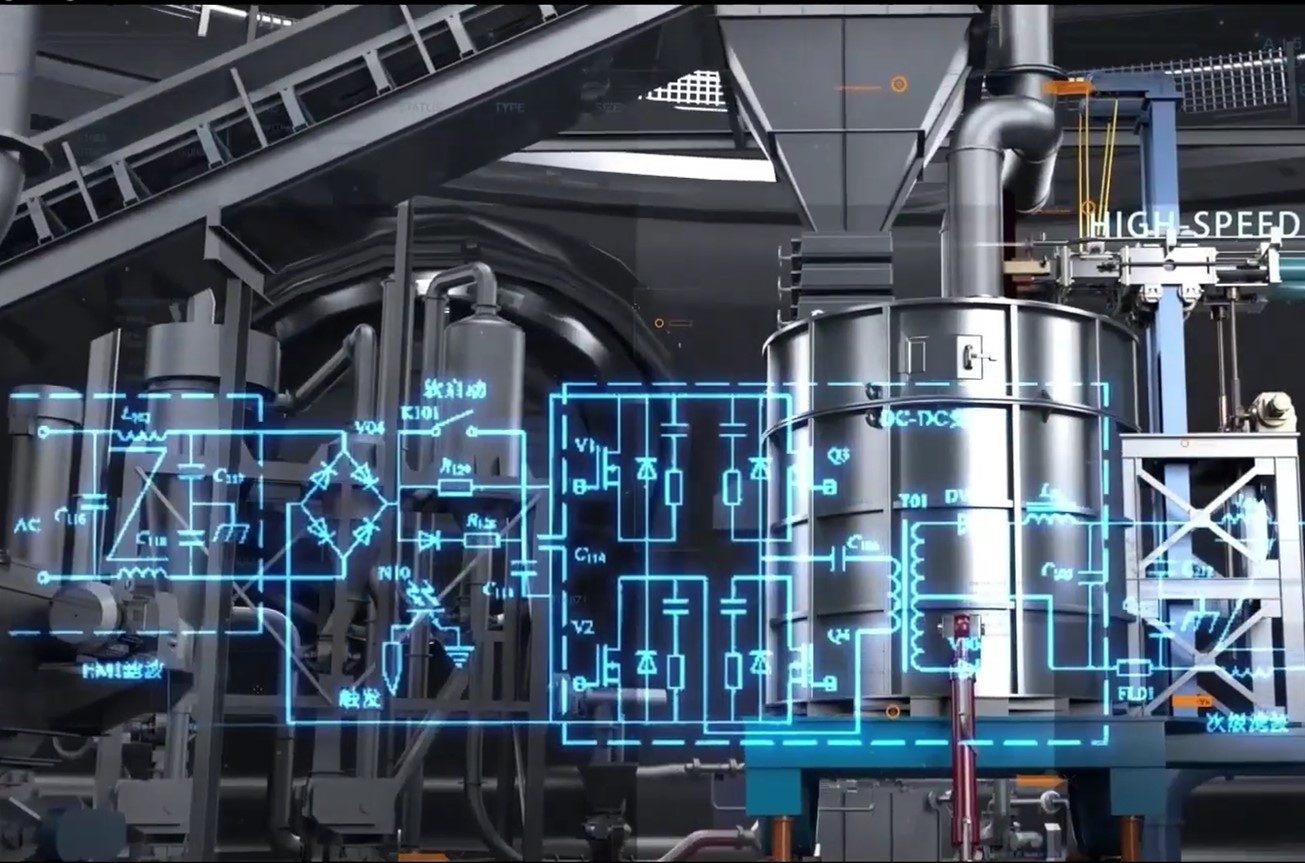
The product supports seamless integration with existing MES systems and smart grids of U.S. steel mills, integrating predictive maintenance and remote operation functions to align with the “minimal staffing, digitalization” transformation needs of U.S. industrial modernization. It can also produce core fusion energy components such as boron carbide and copper-chromium-zirconium alloys, adapting to the U.S. fusion energy industry development plan and helping enterprises enter the high-end material track to seize high-profit links in the value chain.
Position 4: Hazardous Waste Disposal Compliance Solution Provider — Adapting to New Regulations and Reducing Disposal Costs
With the implementation of the EPA’s 2026 hazardous waste permit new regulations (including updates to storage tank standards and emergency plan modules), U.S. hazardous waste disposal enterprises face pressure to upgrade compliance. The YND DC Plasma Furnace positions itself as the optimal solution for hazardous waste disposal enterprises with “efficient harmless treatment + proactive compliance.” Adopting a closed plasma chamber design, it reduces particulate matter emissions by 40% and achieves 100% harmless conversion of hazardous wastes such as PCBs, heavy metal-contaminated soil, and lithium battery waste. The residue can be recycled for building materials, fully meeting RCRA standards and EPA new regulations.
Compared with traditional hazardous waste treatment equipment, YND’s product improves treatment efficiency by 3 times and eliminates the need for additional environmental protection renovation facilities, significantly reducing hazardous waste disposal costs and compliance investments for U.S. enterprises. It is particularly suitable for regions with large hazardous waste output and strict environmental controls such as California and Texas, helping enterprises avoid non-compliance penalties while increasing disposal benefits through resource recycling, achieving the dual goal of “compliance + profitability.”
Position 5: Localized Implementation Guarantor — Low-Risk Adaptation and Full-Lifecycle Support
YND deeply understands U.S. enterprises’ concerns about imported equipment, such as delayed services, complex compliance, and poor adaptability. We break down decision-making barriers with localized services and flexible solutions. A Houston-based regional service center is established with core spare parts in stock, providing 24/7 English technical support and on-site maintenance within 12 hours, covering 90% of steel mills and hazardous waste disposal enterprises in the continental U.S.
The product covers the full power range of 50kVA to 30,000kVA. It offers minimally invasive retrofit solutions for existing equipment (costing only 30%-50% of new purchases, with completion in 7-15 days), adapting to the continuous production needs of large U.S. steel mills. It also provides customized solutions for new production capacity, meeting the differentiated needs of large integrated steel mills in Ohio and Pennsylvania, as well as small and medium-sized specialized smelting enterprises in California and Texas. All components are UL 508C certified, and wiring complies with NEC 70 provisions, ensuring seamless integration into existing production systems and realizing the dual delivery of “strategic value + implementation guarantee.”
Starting from the core demand of capturing federal policy dividends and strengthening critical material supply chain security, to empowering advanced manufacturing upgrading and solving hazardous waste compliance challenges, the YND DC Plasma Furnace, with its clear positioning as a “strategic equipment solution provider,” is deeply integrated into the U.S. national development context. Choosing YND is not just purchasing an efficient piece of equipment, but a key strategic investment to layout the U.S. low-carbon advanced manufacturing track, build core supply chain barriers, and achieve a leap in long-term competitiveness.