Against the backdrop of the accelerated transition toward scrap-based production and the pursuit of carbon neutrality goals within the U.S. steel industry, the high energy consumption, elevated emissions, and suboptimal efficiency inherent in existing alternating current (AC) electric arc furnaces have evolved into core bottlenecks impeding enterprises’ competitiveness. With persistently high industrial electricity tariffs in North America, coupled with increasingly stringent environmental regulatory frameworks—including the EPA Clean Air Act and California’s AB32 Carbon Neutrality Bill—and the incentive orientation of the 45X Advanced Manufacturing Production Tax Credit Program, the upgrading of AC furnaces has emerged as an imperative pathway for U.S. steel mills to reduce costs, enhance operational efficiency, and capture policy dividends. Backed by two decades of technical expertise in smelting processes and 37 core patents, Anyang Younengde (YND) has launched a minimally invasive AC-to-DC furnace retrofit solution specifically engineered for the U.S. market. Dispensing with the need for furnace shell reconstruction, this solution delivers compelling advantages of low upfront investment, abbreviated turnaround time, and high return on investment, enabling U.S. steel mills to rapidly unlock the value of DC technology and realize a transformative leap from regulatory compliance to efficiency leadership.
Alignment with U.S. Policy Frameworks: Capturing Subsidy Dividends and Consolidating Compliance Foundations
YND’s retrofit solution is meticulously aligned with the policy directives of the U.S. federal government and individual states, allowing enterprises to secure multiple layers of policy benefits concurrent with equipment upgrades. Fully compliant with the stipulations of the 45X Advanced Manufacturing Production Tax Credit Program, this retrofit initiative qualifies as an eligible advanced manufacturing equipment upgrade project, entitling enterprises to claim a tax credit of up to 25%, with the policy’s validity period extended through 2031, thereby substantially mitigating initial capital expenditure. Furthermore, the retrofitted equipment seamlessly meets the subsidy criteria for low-carbon manufacturing under the Bipartisan Infrastructure Law, empowering enterprises to gain a decisive competitive edge in government procurement tender processes.
In terms of environmental compliance, the retrofit solution precisely satisfies the rigorous standards promulgated by the EPA. In comparison to pre-retrofit AC furnaces, it achieves a 60% reduction in carbon dioxide emissions per ton of steel produced—far exceeding the 32% emission reduction target mandated by the Clean Power Plan—and curtails particulate matter emissions by 40%, fully satisfying the requirements of localized environmental regulations such as California’s AB32 and Virginia’s Department of Environmental Quality (DEQ) standards. For enterprises participating in carbon trading markets, the retrofitted equipment is eligible for direct carbon credit quota applications, establishing an additional revenue stream and completely eliminating the risk of penalties associated with environmental non-compliance. Moreover, the retrofitted system has obtained full Underwriters Laboratories (UL) certification and complies with the U.S. National Electrical Code (NEC), ensuring seamless integration into existing U.S. production facilities and eliminating potential barriers to market access.
Low Cost and High Return: Unlocking Sustained Benefits Within a Compressed Timeframe
Addressing the core concerns of U.S. steel mills regarding investment efficiency and downtime-related losses, YND employs a minimally invasive retrofit methodology to establish a closed-loop value chain characterized by low investment input, rapid payback, and long-term operational benefits. The total cost of the retrofit represents only 30% to 50% of the expenditure required for procuring a brand-new DC furnace. Rather than dismantling the existing furnace shell, the solution focuses on optimizing the electrode system, rectifier modules, and control systems, with the construction period strictly constrained to 7–15 days, thereby minimizing production downtime losses. This stands in stark contrast to conventional retrofit projects, which typically entail protracted timelines spanning several months, rendering YND’s solution particularly well-suited to the large-scale, continuous production requirements of North American steel mills.
The retrofitted equipment yields remarkable improvements in energy efficiency. Leveraging high-speed rail-grade Insulated Gate Bipolar Transistor (IGBT) rectifier systems, the equipment’s natural power factor is elevated to 0.95–0.98, obviating the need for the procurement and maintenance of reactive power compensation devices and achieving an electricity savings rate of over 20%. Based on average U.S. industrial electricity tariffs, a retrofitted 2000kVA AC furnace can achieve annual electricity savings in excess of 960,000 kilowatt-hours, translating to annual cost reductions of more than $100,000. Concurrently, the inherent stability of the DC electric arc reduces electrode consumption by 35%—with electrode loss rates as low as 1–2 kilograms per ton of steel, a figure substantially lower than that of AC furnaces. Combined with a 40% reduction in equipment failure rates and a 25% cut in annual maintenance costs, the average investment payback period is shortened to just 6–12 months. For high-capacity steel mills, this payback period can be further compressed to 0.7 years, fully aligning with the stringent investment efficiency benchmarks of U.S. enterprises.
Technology-Enabled Operational Excellence: Tailored to U.S. Scrap-Based Smelting Requirements
YND’s retrofit solution is purpose-built to align with the scrap-centric production characteristics of U.S. steel mills, resolving key pain points associated with traditional AC furnaces in scrap smelting applications. The retrofitted furnace adopts a single-electrode bottom-feed configuration, completely eliminating the issues of arc drift and periodic arc interruption that plague AC furnaces, and improving arc stability by 50%. Even when processing low-grade or mixed scrap materials, the system delivers uniform heating without the need for pre-sorting, reducing raw material costs by 20% and perfectly matching the U.S. production system, which relies on scrap for 51% of its steel output.
Catering to the continuous production demands of U.S. steel mills, the retrofitted equipment supports 24/7 uninterrupted operation, shortens the smelting cycle by 20%, reduces metal burnout rates from 8%–10% (typical of AC furnaces) to below 3%, and boosts the recovery rate of rare metals to over 98%. This not only enhances the utilization efficiency of scrap resources but also elevates product added value. Drawing parallels to the successful practices of Charter Steel, which achieved dual optimization of energy consumption and dust emissions through equipment retrofitting, YND’s solution integrates an enclosed arc design with a high-efficiency flue gas capture system. While enhancing operational efficiency, it improves workshop working conditions, mitigates the impact of dust on employee health and equipment performance, and achieves synergistic upgrades in both production efficiency and environmental performance.
End-to-End Localized Services: Ensuring Seamless Retrofit Implementation
YND possesses a profound understanding of the core needs of U.S. steel mills for localized support and compliance assurance, and has established a comprehensive end-to-end service system dedicated to the North American market, eliminating enterprises’ concerns throughout the retrofit process. During the pre-sales phase, YND provides complimentary on-site surveys, customizes personalized retrofit solutions based on regional grid conditions—such as the Electric Reliability Council of Texas (ERCOT) grid and California’s grid specifications—scrap supply characteristics, and local policy requirements, and assists enterprises in preparing application documentation for policy subsidies and tax credits to maximize policy-related benefits.
During the construction and acceptance phases, a team of engineers with extensive international project experience conducts on-site operations in strict adherence to U.S. industrial safety standards, simultaneously completing UL certification and NEC compliance verification, and assisting enterprises in obtaining approval from the EPA and local environmental authorities. In the after-sales phase, YND offers 24/7 English-language technical support, with on-site maintenance services available within 12 hours for customers in North America. The equipment comes with a one-year warranty, and YND provides lifelong technical upgrades and process optimization services to ensure the long-term stable operation of the retrofitted equipment and its adaptability to the evolving production needs of U.S. steel mills.
A Proven Solution for the North American Market: Validated by Global Project Deployments
YND’s retrofit solution has been rigorously validated in over 920 projects worldwide, including customized implementations tailored to North American grid environments and production conditions, earning widespread recognition for its technical maturity and reliability. The solution covers the full power spectrum of AC furnaces, ranging from 50kVA to 30,000kVA, and delivers precisely customized retrofit plans for both large integrated steel mills in Ohio and Pennsylvania, as well as small-to-medium-sized specialized smelting enterprises in Texas and California.
Currently, 67% of new steel production capacity in the U.S. has adopted DC electric arc furnace technology, indicating immense untapped potential in the existing AC furnace retrofit market. With its core advantages of precise policy alignment, controllable investment costs, minimized retrofit cycle, and substantial return on investment, YND’s AC-to-DC furnace retrofit solution has emerged as the preferred partner for U.S. steel mills undertaking capacity upgrades. Choosing YND represents not merely the completion of an equipment retrofit, but a strategic investment to seize the initiative in the U.S. low-carbon steel industry and achieve a leap forward in long-term competitiveness.

24*7 Online
+44-7707759115
YND AC-to-DC Furnace Retrofit: A Customized Low-Carbon Upgrade Solution for U.S. Steel Mills
YND AC-to-DC Furnace Retrofit: A Customized Low-Carbon Upgrade Solution for U.S. Steel Mills
Recommended Products
New energy-saving DC electric arc furnace, submerged arc furnace, plasma furnace, refining furnace,New energy-saving DC electric arc furnace, submerged arc furnace, plasma furnace, refining furnace
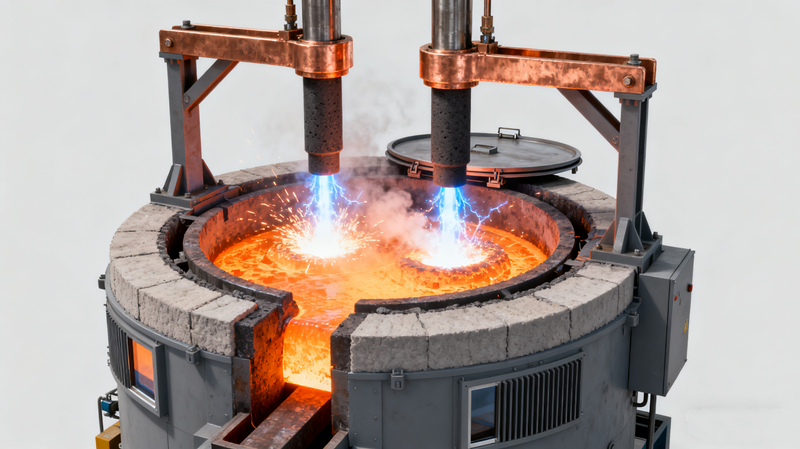
The Evolution of the Electric Arc Furnace
Learn More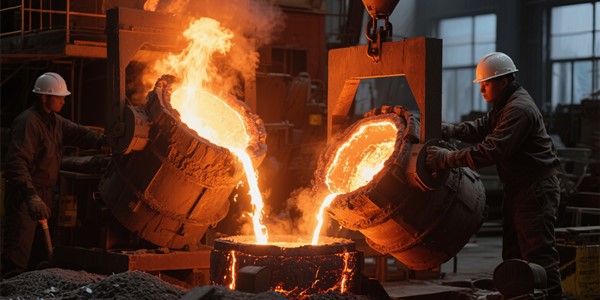
DC Electric Arc Furnaces
Learn More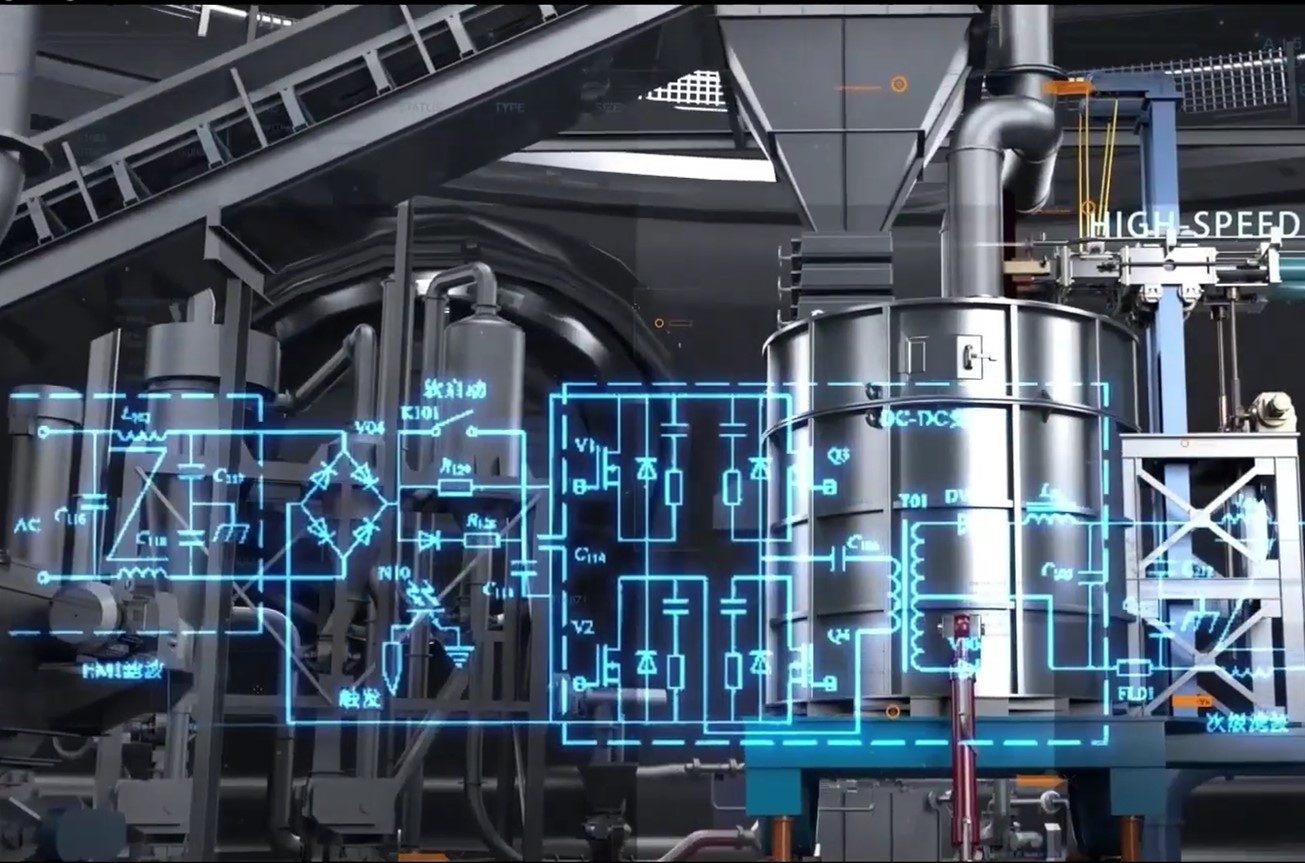
The conversion of AC arc furnaces to DC
Learn More
DC Electric Arc Furnace
Learn MoreZHENJUN DC Electric Arc Furnace - Reduce 15% Electricity Consumption, Improve 20% Production Efficiency, Save 35% Electrode Consumption, Natural Power Factor 0.95-0.98 than AC Arc Furnace.
Get More Information Please Click - Contact Us

Send an email for consultation
sales@ayzj.net
Free Consultation