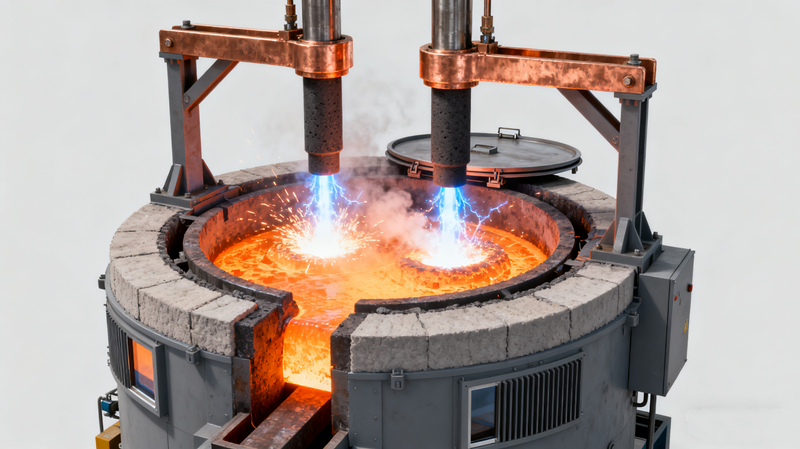
DC mineral electric furnaces do indeed offer advantages over AC furnaces in specific scenarios, though selection must account for raw material characteristics. The following outlines key comparisons:
I. Energy Efficiency and Consumption Reduction Lower electricity consumption:
DC arc resistance heating achieves high thermal efficiency, reducing electricity consumption per tonne of product by 150-250 kWh and coke consumption by 10%-20%. Enhanced recovery rates: Concentrated heat output increases element recovery by 3%-5% while reducing electrode consumption by 20%-30%.
II. Differences in Smelting Performance Advantageous Scenarios:
Suited for high-resistance raw materials (e.g., manganese ore), where DC resistance heating accelerates reduction reactions and enhances lead/zinc removal efficiency.
Disadvantageous Scenarios: Poor adaptability to low-melting-point materials (e.g., scrap steel), exhibiting slow start-up and susceptibility to “electrode sticking”, potentially resulting in 3%-5% higher slag metal content.
III. Comprehensive Cost-Benefit Analysis Equipment Investment:
DC mineral furnaces entail higher initial capital expenditure. However, the Inner Mongolia Jinglei Industrial case study demonstrates a reduction of ¥200-300 per tonne in operating costs, alongside annual carbon emissions reductions exceeding 260,000 tonnes.
Conclusion: DC mineral furnaces deliver significant energy savings when processing high-resistance raw materials. Selection must be tailored to feedstock characteristics, avoiding deployment in low-melting-point applications.